Validating Ghana's Zero-Emission Vehicle Supply-Side Regulation
On 5 March 2026, government, industry and development partners met at the Ministry of Transport in Accra to validate Ghana's draft Zero-Emission Vehicle Sales Standard, the country's first supply-side regulation for electric mobility.
1 October 20265 min read0 likes0 comments
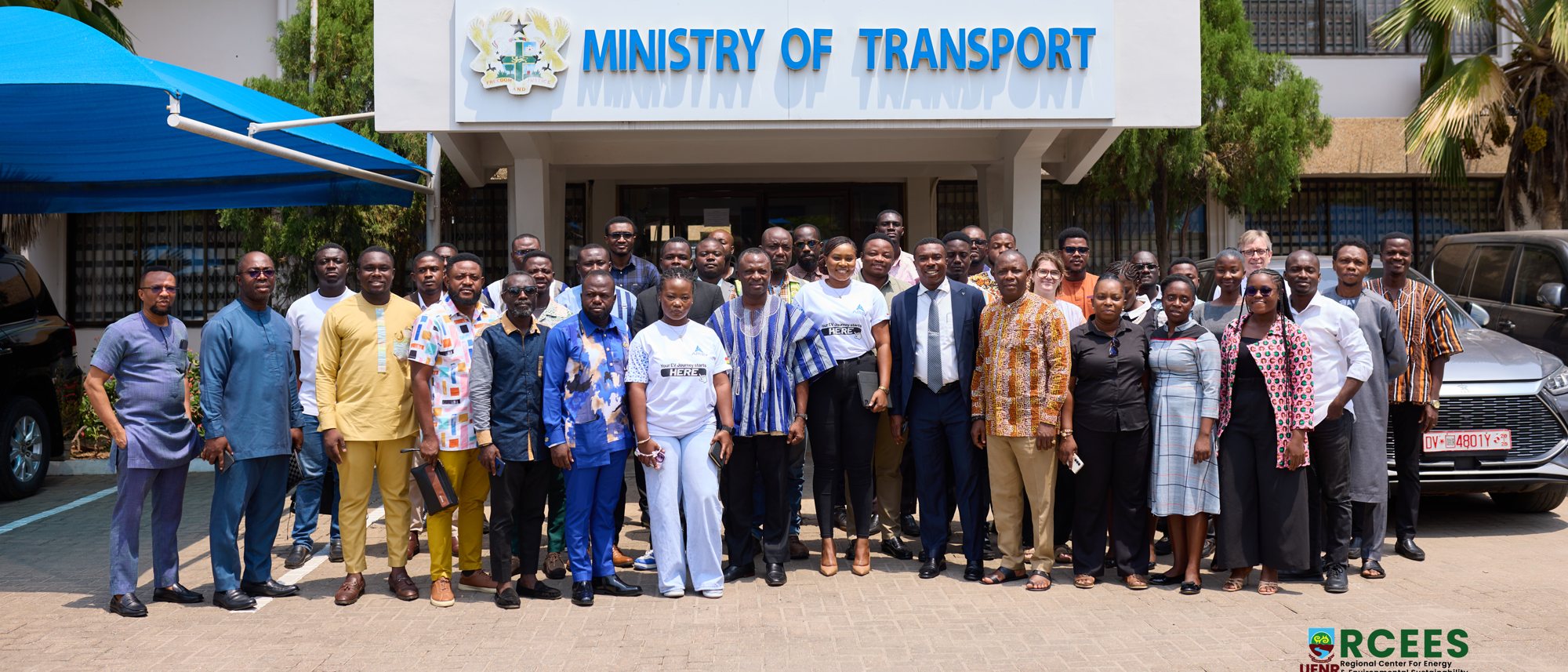
On 5 March 2026, the Regional Centre for Energy and Environmental Sustainability (RCEES) at the University of Energy and Natural Resources, the United Nations Environment Programme (UNEP) and the Ministry of Transport convened a stakeholder validation workshop on Ghana's draft Supply-Side Regulation (SSR) for electric vehicles. The workshop was held in the New Conference Room of the Ministry of Transport in Accra.
I coordinated the workshop and presented Ghana's electric vehicle policy context and the objectives of the regulation, together with its implementation protocol and institutional arrangements.
Background
Ghana's transport sector accounts for about 48% of the country's energy-related carbon dioxide emissions. Most vehicles entering the market are used imports, so the composition of the national fleet is largely decided before vehicles reach Ghanaian buyers. Demand-side measures such as tax waivers and charging infrastructure are necessary, but they cannot by themselves change which vehicles are supplied to the market.
A supply-side regulation addresses that directly. It places obligations on the entities that bring vehicles into the country: importers, assemblers and manufacturers. Since 2025, RCEES has been developing Ghana's SSR with review and coordination by UNEP and funding from the ClimateWorks Foundation. The process included a baseline study, a government-industry consultative workshop on sales targets, technical reports on the mechanism, institutional arrangements and penalties, a financial assessment, and expert review by UNEP, the ClimateWorks Foundation and the International Council on Clean Transportation (ICCT). The 5 March workshop was the formal validation step for that body of work.
The workshop
The objective was to present the draft regulation and hold a structured dialogue to validate its regulatory framework, penalty framework and implementation roadmap. Participants received the concept note and the draft regulation documents in advance.
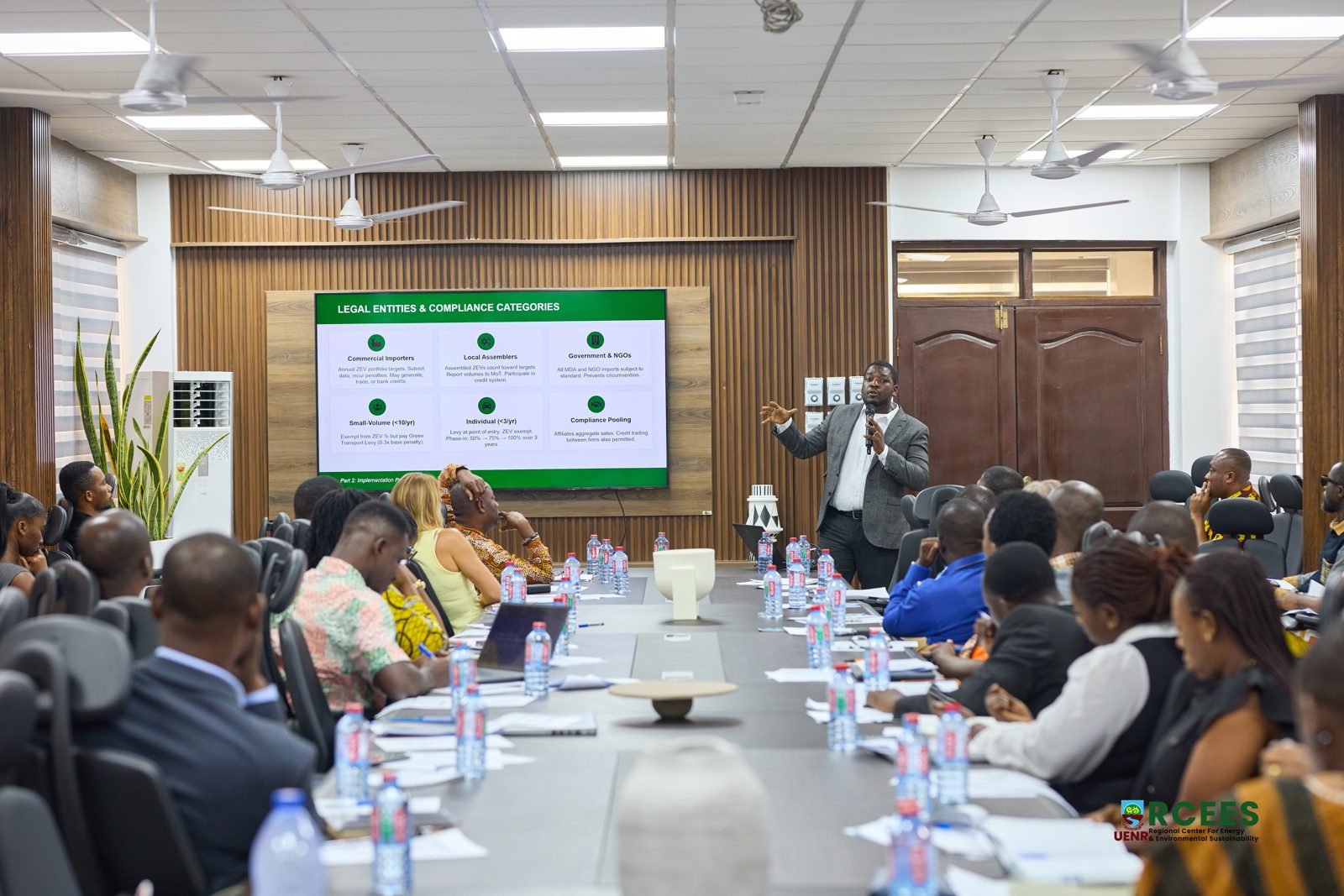
The programme opened with remarks from the Ministry of Transport, UNEP and the RCEES project lead, Rev. Prof. Ing. Eric Ofosu Antwi. I then set out the national policy context and the objectives of the regulation, and Dr. Felix Amankwah Diawuo presented the SSR development process. My presentation also covered how the regulation would be implemented: which institutions hold which responsibilities, how compliance data would flow between agencies, and which legal entities fall under each compliance category.
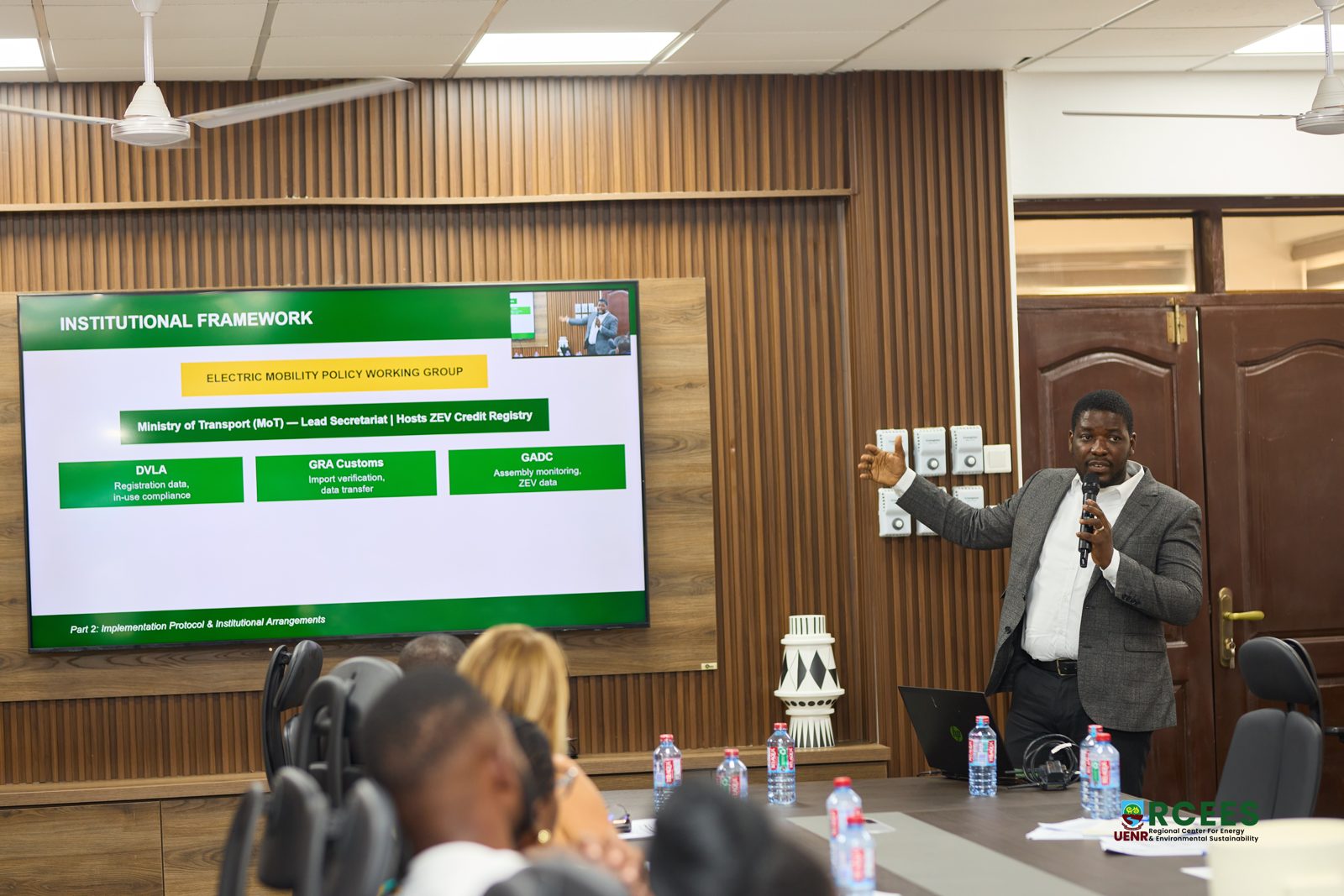
An open plenary session followed for questions, clarifications and stakeholder inputs on the draft.
Invited participants came from government ministries and agencies, vehicle importers and assemblers, electric mobility companies, charging operators, financial institutions, transport operators, academia and development partners.
What was presented for validation
The draft establishes a Zero-Emission Vehicle (ZEV) Sales Standard as Ghana's principal supply-side instrument. Its main elements are:
- Sales targets by vehicle category. Regulated entities must ensure that a minimum share of their annual sales are zero-emission vehicles, with targets set separately for each category and rising from 2027 to 100% by 2040. For private cars, the draft proposes 5% in 2027, 25% by 2032, 50% by 2035, 70% by 2037 and 100% by 2040. Two- and three-wheelers start at 15% and 12% respectively, buses at 10%, and freight trucks at 5%, rising to 30% by 2030 in line with the Global MOU on Zero-Emission Medium- and Heavy-Duty Vehicles.
- Coverage. The standard applies to new and used vehicles, imported or locally assembled, and to commercial importers, assemblers and government institutions that import vehicles. Compliance is assessed on each entity's annual portfolio, not on individual consumers.
- Credit trading. Entities that exceed their targets generate tradeable credits (one per ZEV, half per plug-in hybrid), restricted by vehicle segment and valid for five years. Credit prices are capped below the penalty rate, so buying credits is always cheaper than paying fines.
- Penalties. The draft proposes per-vehicle shortfall penalties that vary by vehicle category, additional charges for repeat non-compliance, and escalating measures for persistent violators, including suspension of import licences.
- Green Transport Development Fund. Penalty and levy revenues would go to a ring-fenced fund under the Ministry of Transport, with 40% allocated to charging infrastructure and the remainder to consumer incentives, fleet transition financing, emissions monitoring and research.
- Phased enforcement. 2027 is a reporting-only grace year, penalties start at 50% in 2028, and full enforcement begins in 2029.
- Institutional roles. The draft assigns responsibilities to the Ministry of Transport, DVLA, the Ministry of Finance and GRA Customs, the Ghana Standards Authority, the EPA, the Ghana Automotive Development Centre, the Ministry of Trade, Agribusiness and Industry, and the Electric Mobility Policy Working Group.

Participatory scenario development session
The second session was led by Delft University of Technology (TU Delft) and the Kwame Nkrumah University of Science and Technology (KNUST) under their joint research collaboration on electric mobility. The research team presented interview results and policy packages, and participants worked in groups to agree a shared vision for electric mobility in Ghana and to develop pathways towards it.
Outcomes and next steps
The workshop completed the validation stage of the national policy formulation process. Stakeholder inputs from the session were incorporated into the final policy document, which was prepared to the format of the National Development Planning Commission (NDPC) so that it can move through government's own adoption process.
Later in March, the process and its lessons were shared with neighbouring countries through a sub-regional ECOWAS webinar on supply-side regulation for electric mobility.
The remaining steps towards formal adoption are:
- A consultation with the Electric Mobility Policy Working Group and wider stakeholder engagement across the regions.
- Finalisation of the communications strategy and the implementation matrix.
- A Strategic Environmental Assessment, as required for new policies.
- Submission to the NDPC for technical clearance.
- Legal review by the Attorney-General.
- A Cabinet memorandum and Cabinet approval.
- Drafting of a Legislative Instrument to give the standard legal effect.
Acknowledgements
I thank the Ministry of Transport, UNEP and the ClimateWorks Foundation for their support, my colleagues at RCEES, the TU Delft and KNUST research team, and all participants for their contributions to the validation of the regulation.
Comments
Give a name or stay anonymous. Everything is read before it appears, so there is a wait between posting and publication.
No comments here yet. Yours would be the first.